Table of contents :
- INTRODUCTION TO HALAL-CERTIFIED POPCORN AND ITS GROWING POPULARITY
- The Growing Global Demand for Halal Products: Why It Matters to You
- WHAT IS HALAL CERTIFICATION AND WHY IS IT CRUCIAL?
- What Exactly is Halal Certification?
- Why Halal Certification Matters for Consumers
- HALAL-CERTIFIED POPCORN: A RISING TREND IN THE MIDDLE EAST AND SOUTHEAST ASIA
- Why Halal Snacks Are Gaining Popularity in the Middle East
- Southeast Asia: The Booming Market for Halal-Certified Snacks
- TAIWAN POP-SMILE'S HALAL-CERTIFIED POPCORN: A GAME-CHANGER IN INTERNATIONAL MARKETS
- Why Taiwan Pop-Smile is Positioned for Success in the Halal Snack Market
- Expanding Taiwan Pop-Smile’s Halal-Certified Popcorn to Global Markets
- THE ROLE OF POP-SMILE'S TOURISM FACTORY IN PROMOTING HALAL-CERTIFIED POPCORN
- Pop-Smile Tourism Factory: An Ambassador for Halal Popcorn
- Boosting B2B Cross-Border Trade Through the Pop-Smile Factory
- CHALLENGES AND OPPORTUNITIES IN THE HALAL-CERTIFIED POPCORN INDUSTRY
- Overcoming Challenges in Halal Certification and Production
- Future Prospects for Halal-Certified Popcorn
The Growing Global Demand for Halal Products: Why It Matters to You
As global consumers increasingly seek higher standards of food safety, quality, and ethical responsibility, demand for Halal-certified products continues to grow. For many consumers, choosing Halal-certified food is not only related to religious beliefs; it also represents confidence in product quality and safety. Particularly in markets like the Middle East and Southeast Asia, Halal products have become an integral part of daily life. This trend extends beyond traditional foods, with snacks such as popcorn increasingly becoming part of the Halal certification landscape.
In this article, we will explore the growth of Halal-certified popcorn and how Taiwan's Pop-Smile popcorn manufacturing facility has leveraged this trend to expand into Middle Eastern and Southeast Asian markets while creating new international B2B partnership opportunities. For global food brands and consumers alike, Halal certification represents more than product compliance—it reflects trust, quality assurance, and respect for diverse cultural needs.
What Exactly is Halal Certification?
- - Definition of Halal Certification :
Halal certification is a process that ensures products meet the dietary requirements outlined by Islamic law. It's a guarantee that the food does not contain prohibited ingredients (like pork or alcohol), and has been processed in a manner that aligns with Halal standards. - - Halal Certification Process :
For a product to be Halal certified, it must undergo a rigorous review by authorized bodies. This includes inspections of ingredients, production processes, and even packaging.
Why Halal Certification Matters for Consumers
- - For Muslim Consumers :
In many regions, especially the Middle East and Southeast Asia, Halal certification is more than just a standard; it's a religious and cultural necessity. It ensures that consumers are following their faith while enjoying safe, high-quality products. - - For Non-Muslim Consumers :
More and more non-Muslim consumers are turning to Halal products due to their reputation for higher quality, transparency in sourcing, and ethical production methods.
Why Halal Snacks Are Gaining Popularity in the Middle East
- - Key Drivers in the Middle East :
Increased urbanization, a growing young population, and higher disposable incomes have made the demand for Halal-certified snacks skyrocket. Additionally, the Middle Eastern diet has long been shaped by Halal practices, creating a ready market for Halal-certified products. - - Market Insights :
The Middle East snack market is expected to grow at a rapid pace. Halal popcorn, with its unique flavors and nutritional benefits, is a product that fits perfectly into this trend.
Southeast Asia: The Booming Market for Halal-Certified Snacks
- - Cultural Ties to Halal :
Countries like Malaysia, Indonesia, and Singapore have large Muslim populations, and Halal-certified products are not just a dietary preference—they are a lifestyle. As the Halal industry continues to grow, snacks such as Halal popcorn are increasingly being sought after. - - Consumer Behavior in Southeast Asia :
This region is known for its diverse tastes and preferences. Halal snacks are now being tailored to local flavors, offering something unique for every market segment.
 左右滑動看表格
| Aspect | Middle East | Southeast Asia |
| Muslim Population | 90%+ (key markets: UAE, Saudi Arabia) | 60%+ (key markets: Indonesia, Malaysia) |
| Snack Preferences | Savory, light snacks, larger portions | Diverse, mix of sweet & savory snacks |
| Growth Rate of Halal Snack Market | High (expected 8-10% annually) | High (estimated 7-9% annually) |
| Competitive Landscape | Established regional players | Increasing international entries |
Why Taiwan Pop-Smile is Positioned for Success in the Halal Snack Market
- - Commitment to Halal Certification :
Taiwan Pop-Smile has been proactive in acquiring Halal certification for many of its food products, ensuring they meet the strictest standards. This commitment is seen as a competitive advantage when exporting to Halal-demanding regions. - - Innovation and Quality :
Taiwan Pop-Smile's popcorn industry stands out for its focus on quality, flavor innovation, and sustainability. Taiwan Pop-Smile's snacks are made with top-tier ingredients and unique production techniques, ensuring a premium product that meets both Halal standards and consumer expectations.
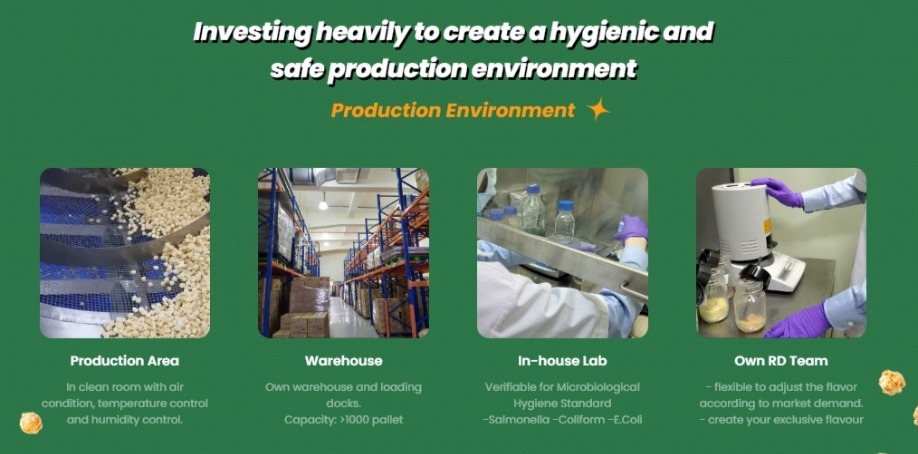
POP-SMILE POPCORN - PRODUCTION ENVIRONMENT
Expanding Taiwan Pop-Smile’s Halal-Certified Popcorn to Global Markets
- - Strategic Partnerships and Distribution Networks :
Taiwanese brands, through various trade shows and strategic partnerships, have begun to build relationships with key distributors in the Middle East and Southeast Asia. This has opened doors for Taiwan to expand its reach. - - Case Study: Pop-Smile's Success in Exporting to the Middle East :
Pop-Smile, a Taiwanese popcorn brand, has seen great success in exporting Halal-certified popcorn to the Middle East. Through dedicated marketing efforts and quality products, Pop-Smile has carved a niche for itself in these competitive markets.
Pop-Smile Tourism Factory : An Ambassador for Halal Popcorn
- - Introduction to Pop-Smile's Factory :
The Pop-Smile tourism factory in Taiwan serves as both a production site and an experiential marketing tool. Visitors from the Middle East and Southeast Asia often tour the factory, gaining firsthand insight into the production process and the high standards upheld. - - Building Trust with Consumers and Partners :
The factory also provides a platform for B2B engagements, allowing potential partners to better understand the quality, processes, and Halal certification that defines Pop-Smile's products.
Boosting B2B Cross-Border Trade Through the Pop-Smile Factory
- - Export Relationships :
By inviting business partners from overseas to visit the factory, Pop-Smile strengthens its B2B relationships. This personal touch helps facilitate smoother transactions and builds stronger partnerships. - - Networking and Trade Shows :
Pop-Smile also hosts networking events and participates in international food trade shows, where it directly interacts with distributors, buyers, and key stakeholders from Halal-centric markets.
Overcoming Challenges in Halal Certification and Production
- - Certification Costs and Process Complexity :
Obtaining Halal certification can be a time-consuming and expensive process, especially for new brands looking to enter international markets. Understanding the legalities and production guidelines is crucial to maintaining certification. - - Cultural and Market Barriers :
While there's a growing global interest in Halal-certified snacks, adapting to the specific taste preferences of different regions can be challenging. For example, while Middle Eastern consumers may prefer savory popcorn, Southeast Asian consumers might lean towards sweet and spicy flavors.
Future Prospects for Halal-Certified Popcorn
- - Expanding Beyond Middle East and Southeast Asia :
There is significant potential for growth in regions like Europe, North America, and even Africa, as more consumers seek Halal products regardless of their religious background. - - Innovations in Halal Popcorn Products :
The future of Halal popcorn lies in flavor innovations, packaging sustainability, and more personalized marketing strategies. Brands that can meet these evolving demands will likely see continued success in international markets.
Pop-Smile Visitor Center as a Symbol of Trusted Manufacturing Power, Enhancing Cross-Border Collaboration Success
By offering transparency and demonstrating its commitment to quality, Pop-Smile's Visitor Center strengthens its position as a trusted manufacturing partner. This transparency is key to building successful cross-border collaborations, fostering long-term relationships with international retailers and distributors.
- - The Global Trend Toward Halal Products :
The demand for Halal-certified products, including popcorn, is expected to continue growing as more consumers value quality, safety, and ethical production. - - Taiwan Pop-Smile's Growing Influence in Halal Snacks :
Taiwanese brands like Pop-Smile are well-positioned to leverage Halal certification and export to growing global markets, particularly in the Middle East and Southeast Asia. - - The Strategic Role of Pop-Smile's Tourism Factory :
By combining high-quality Halal popcorn with experiential marketing and B2B networking, Pop-Smile is setting a model for how Taiwanese brands can successfully compete on the global stage.

- - Market Research on Halal Food Industry Trends - Halal Industry Development Corporation
- - Global Halal Food Market Report 2024 - Statista
- - Taiwan Pop-Smile's Export Strategies for Halal Snacks - Taiwan External Trade Development Council